

Texas AG Candidate Wants to Reshape Workplace AI Rules: Here’s What it Means for Employers
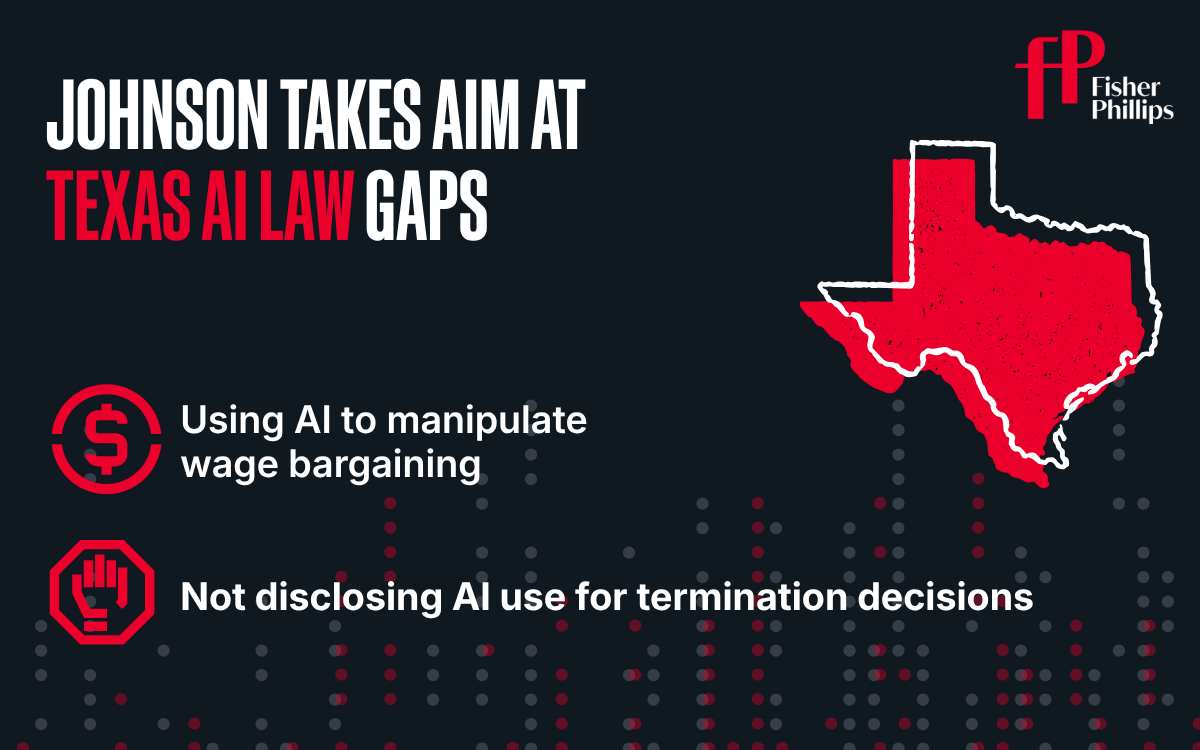
A candidate running for Texas Attorney General just released a plan that could reshape how the state regulates the workplace use of AI, and there’s a reasonable chance he could actually win the election and implement his ideas. State Senator Nathan Johnson, the Democratic nominee facing Republican Mayes Middleton this November, says that he’d spend his first 30 days in office auditing Texas’s laws to find where they fall short when it comes to AI. He specifically believes they should better address workplace AI tools used to manipulate wage negotiations and AI-assisted termination decisions made without proper disclosures. And because of the unique dynamics shaping this year’s Election Day, Johnson could realistically become the first Democratic Texas AG in over 25 years. What’s in his plan, and what do employers need to know?
Where Texas Fits into the Broader Trend
Surprisingly, Texas was the first among red states to regulate AI. The Texas Responsible AI Governance Act (TRAIGA), which took effect January 1, 2026, already bars employers from using AI systems with the intent to discriminate against protected classes in hiring or firing decisions.
But that’s where it stops. TRAIGA doesn’t address AI tools used to unethically shape wage bargaining, and it doesn’t require employers to tell workers when AI played a role in a termination or staffing decision.
Johnson’s Workplace AI Plan
Johnson’s plan, which you can find here, takes direct aim at those two gaps. “The laws designed to protect Texans must keep pace with advances in technology and marketing innovation,” he says. In his opening month in office, Johnson says he will “conduct a systematic and comprehensive audit of existing…employment laws to determine where the law falls short of what’s needed to protect…workers from exploitation.”
Johnson acknowledges that the existing TRAIGA law bars discriminatory use of AI in hiring and firing decisions, but specifically calls out that:
- it does not address the predatory use of AI to unethically manipulate wage bargaining;
- it does not require employers to disclose when AI helped decide who or which position was selected for termination.
Open Question: How Far Could He Go?
Republicans are strongly expected to retain both chambers of the Texas Legislature in 2026, even if Democrats benefit from an unusually favorable statewide environment this November. This raises the question: could Johnson implement his plan without the help of lawmakers who would almost certainly be hostile to blue-state-style AI regulation?
TRAIGA relies on the Attorney General as the single enforcer. So, a change in who holds that office could determine how aggressively AI rules get enforced and potentially expanded in Texas. But the question of how far he could shape broad regulations given the limited scope of TRAIGA is up in the air, and he would probably face litigation from business groups if he tries to push too far.
Johnson says he doesn’t want to lead the charge alone, however. He says he will “work with legal teams and the Legislature” to craft and pass new legislation that fills in the identified gaps in the law. He also says he’ll establish a biannual report from the AG’s Consumer Protection Division on technological advances and other changes creating vulnerabilities for employees with the goal of keeping the Legislature moving at the same pace as technology.
How the Race Stands
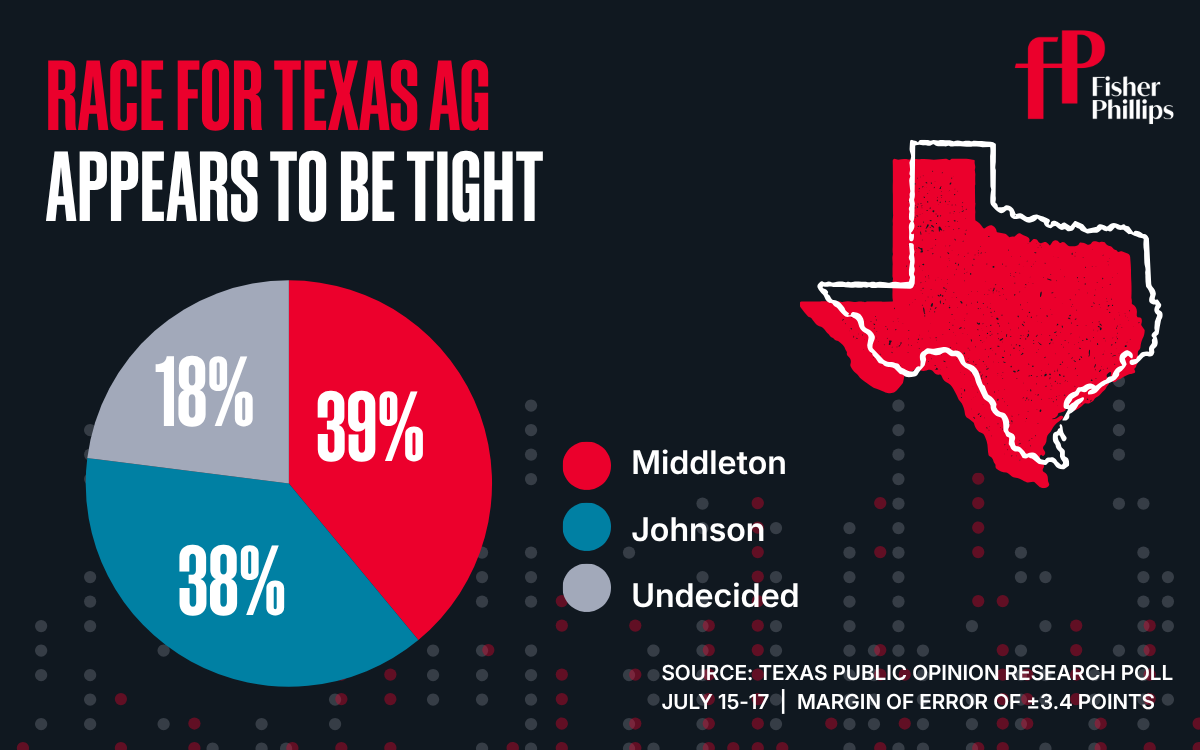
The race between Johnson and Middleton is close. A Texas Public Opinion Research poll conducted July 15-17 found 39% of likely voters backing Middleton and 38% backing Johnson, with 18% undecided. Given the margin of error of ±3.4 points, the race is effectively a toss-up heading into the busy fall campaign season.
Polling indicates that the state will face two other tight statewide races – the Senate election between Democratic State Rep. James Talarico and Republican AG Ken Paxton is rated as a Toss-Up by the Cook Political Report, and the gubernatorial election between Democratic State Rep. Gina Hinojosa and Republican incumbent Gov. Greg Abbott is “surprisingly competitive” according to The Hill) – which could boost Johnson’s chances.
What Should You Do Now?
Whether or not Johnson’s specific proposals become law, here are some steps to address AI use in your workplace:
- Document your AI’s role in employment decisions. Keep records of what AI tools affect hiring, promotion, discipline, and termination decisions, and what human review looks like at each step.
- Build in human review for consequential decisions. Make sure a human with real authority to override the AI’s output is part of any hiring or termination process, even where AI plays a role.
- Vet your vendors. Ask AI vendors how their tools were tested for bias and what safeguards exist against manipulative design, particularly for any tool touching compensation or bargaining. Read more here.
Conclusion
We’ll continue to monitor developments and provide the most up-to-date information directly to your inbox, so make sure you are subscribed to Fisher Phillips’ Insight System. If you have questions, contact your Fisher Phillips attorney, the authors of this Insight, any attorney in our Texas offices, or any attorney in our AI, Data, and Analytics Practice Group.
Related People



Regional Managing Partner, Co-Chair of Sports Industry Team
emailSend Email
phone214.220.8304