

When Influencer Marketing Creates Workplace Risks: 4 Compliance Tips for Businesses
When a company hires a social media influencer for a campaign, marketing teams usually treat it like buying an ad. You pay a fee, get a video or post in return, and move on. But behind the scenes, there may be a sneaky legal risk. If your brand or company exercises too much control over how, when, and where an influencer creates content, you might unknowingly find yourself in an employment relationship, which could expose you to wage and hour liability. And there are other factors to consider if you want to use your existing employees to serve as influencers to boost your brand. Here are three important questions to consider and four best practices to help you avoid wage and hour mistakes.
1. Can Your Level of Control Trigger an Employment Relationship?
When brand control starts shaping how influencers do their work, not just what they deliver, the line between creator and employee can quickly blur. A closely managed influencer campaign can come with the unintended consequence of looking more like an employment relationship than an independent contractor arrangement. Federal and state laws generally focus on the reality of the work relationship, not just what your contract says. So, depending on how you treat influencers, the law may consider them employees. Micro-managing, for example, can create potential issues if you:
-
- Dictate exact schedules and locations, like demanding that an influencer film at a specific spot on a specific day or post at exact times down to the minute
- Provide the gear and software, including requiring creators to use your company’s editing software, cameras, or internal tools
- Demand exclusive relationships, like long-term deals that block an influencer from working with almost anyone else and make them financially dependent on your company
- Punish poor performance in ways that look like workplace disciplinary action, such as slashing pay, demanding unpaid re-shoots or multiple versions of edits, or penalizing creators if a post doesn’t perform
2. Should You Turn Your Current Employees into Brand Ambassadors?
What if you don’t use outside influencers and instead rely on your current workforce to boost your brand? There are legal risks here too. A popular marketing trend is “employee advocacy,” where companies ask, encourage, or permit everyday staff, like retail workers, customer service reps, or office staff, to post about the brand on their personal social media accounts.
While this content feels authentic, it creates a potential off-the-clock work risk. Under federal law, non-exempt employees are generally entitled to compensation if the work benefits the employer, even when volunteering. This time can include:
-
- Off-the-clock content creation, such as brainstorming, filming, editing TikToks or Instagram Reels, and drafting captions after working hours or on weekends
- After-hours engagement monitoring, such as responding to audience comments, tracking post analytics, or replying to direct messages on behalf of the company while off-duty
Issues with “Optional”: Even if you tell the employee that the program is completely optional, employees often feel subtle pressure to participate to impress management, especially if managers praise, reward, or implicitly expect participation. Courts may view this type of social media activity as mandatory work and could lead to trouble if that time is not tracked and paid.
Regular Rate Calculations: Additionally, you may be at risk for regular-rate calculation errors. What’s that you ask? If a company pays employees a flat stipend, gift card, or commission for social media posts, those amounts should generally be factored into non-exempt employees’ “regular rate of pay” for purposes of calculating overtime rates. Otherwise, you could be on the hook for costly violations (on top of off-the-clock work, you may face liquidated damages and attorneys’ fees).
3. What Can Misclassification Mistakes Actually Cost You?
If a court or government agency decides your influencers should have been treated as non-exempt employees – or your employee brand ambassadors should have been paid for boosting your brand – the costs can add up quickly and may include:
-
- Unpaid Overtime: If content creation pushes a non-exempt employee over 40 hours in a workweek, you’ll owe time-and-a-half overtime rates.
- Off-the-Clock Back Pay: You may have to compensate workers for unrecorded hours spent brainstorming, filming, editing, and replying to comments.
- Expense Reimbursements: You might be forced to pay back money they spent on phone bills, gear, travel, or editing apps.
- Double Penalties and Legal Fees: Courts regularly order companies to pay “liquidated damages” that double the money owed, as well as workers’ reasonable legal fees.
- State Law Penalties: Some states may have additional penalties for failing to properly pay influencers and brand ambassadors, such as damages that triple the amount of wages owed or a longer statute of limitations.
4 Best Practices to Keep Your Campaigns Safe
You don’t need to scrap your influencer or brand ambassador programs, but you do need clear boundaries. Consider taking the following four steps to stay compliant with worker classification and wage and hour laws:
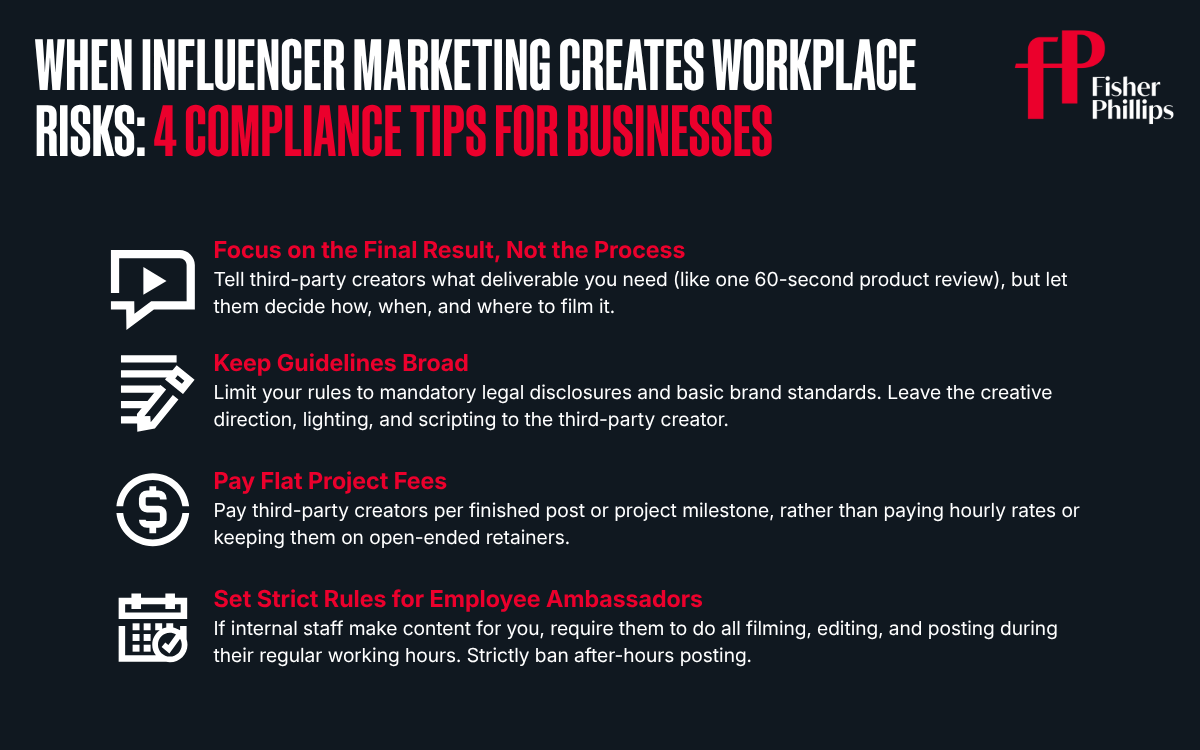
- Focus on the Final Result, Not the Process: Tell third-party creators what deliverable you need (like one 60-second product review), but let them decide how, when, and where to film it.
- Keep Guidelines Broad: Limit your rules to mandatory legal disclosures and basic brand standards. Leave the creative direction, lighting, and scripting to the third-party creator.
- Pay Flat Project Fees: Pay third-party creators per finished post or project milestone, rather than paying hourly rates or keeping them on open-ended retainers.
- Set Strict Rules for Employee Ambassadors: If internal staff make content for you, require them to do all filming, editing, and posting during their regular working hours. Strictly ban after-hours posting. Ensure they are paid for all the time spent working. If that needs to be outside their normal hours, make sure you have a clear process to approve overtime and track hours for non-exempt employees.
Conclusion
We will continue to monitor developments related to all aspects of workplace law. Make sure you are subscribed to Fisher Phillips’ Insight System to get the most up-to-date information. If you have questions, contact your Fisher Phillips attorney, the authors of this insight, or any member of our Wage and Hour Practice Group.
Related People