Congressional Democrats Push PRO Act as They Unveil Pro-Union Agenda for 2027
Congressional Democrats and the nation’s largest labor federation made clear this week that resurrecting and passing the union-friendly PRO Act was their key priority now that Democrats have won control of both the House and Senate. Standing outside the Capitol on November 10, the four co-chairs of the Congressional Labor Caucus joined the AFL-CIO President to release a “Pro-Worker Path Forward” built around union organizing, higher wages, expanded benefits, and new guardrails on workplace AI. But Democrats will still face a Senate filibuster and a President who has promised to veto bills as needed, so how much of this agenda is likely to become law anytime soon? Here’s what was said, what’s realistic, and what employers should do now.
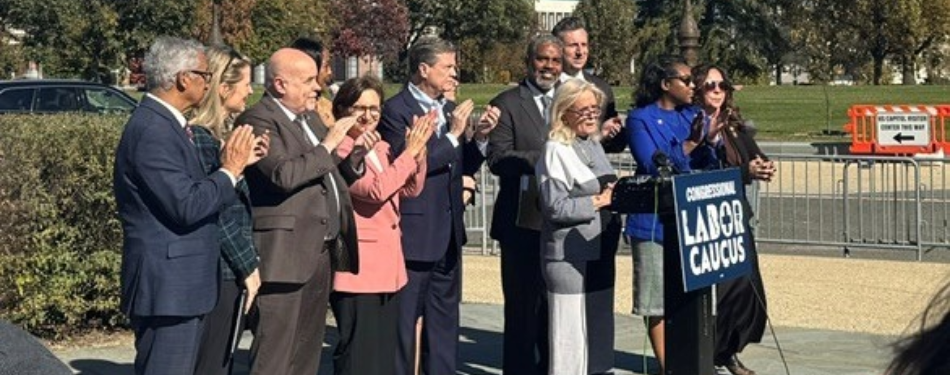
Labor Caucus and AFL-CIO Lay Out Post-Election Agenda
The press conference featured Caucus Co-Chairs Debbie Dingell (D-MI), Steven Horsford (D-NV), Donald Norcross (D-NJ), and Mark Pocan (D-WI), along with AFL-CIO President Liz Shuler and Rep. Bobby Scott (D-VA), the top Democrat on the House Education and Workforce Committee. They made clear they view the election as a mandate for organized labor:
- Norcross said he expects the Caucus to grow to about 150 members in the next Congress, up from about 125 today.
- Pocan noted that 40 members of the incoming House and Senate will hold union cards.
- Shuler said Democrats won union voters by 22 points this cycle.
3 Labor Bills Got a Mention
Caucus members named three pieces of labor legislation they will focus on in 2027:
1. The PRO Act. Pocan called for passing this sweeping labor bill “right away.” The bill (full summary here) would make it easier for unions to organize, override state right-to-work laws, add financial penalties for unfair labor practices, and narrow who can be treated as an independent contractor under federal labor law. If the bill passes, the NLRB would set aside a union election loss if it determines that the employer committed an unfair labor practice or interfered with the vote. And instead of scheduling a new election, the NLRB would certify the union and issue a bargaining order if a majority of workers had signed authorization cards. Every Caucus member must support it as a condition of joining.
2. The Public Service Freedom to Negotiate Act. This bill would guarantee collective bargaining rights to state and local government workers nationwide, including in states that don’t allow public-sector bargaining today. Its main impact would fall on public employers.
3. The Faster Labor Contracts Act (FLCA). Speakers referenced this bill but did not specifically call for its passage next Congress – most likely because they are shooting for the PRO Act as their main goal with the FLCA as a potential fallback position. It would require bargaining to start within 10 days of a union win, send stalled talks to federal mediation after 90 days, and push unresolved first contracts to binding arbitration (read more here).
Democrats’ Broader Wish List
Scott and the co-chairs also outlined the issues they plan to prioritize once they take the gavels in January:
- AI guardrails: legislation protecting worker data and shielding whistleblowers who raise AI concerns
- Minimum wage: an increase in the federal minimum wage (no figure given)
- Health coverage: restoring Affordable Care Act subsidies and reversing Medicaid cuts
- Federal workforce: restoring collective bargaining rights for Defense Department employees and all federal workers
- Paid leave: a federal paid leave policy (no details given)
- Childcare: raised as a priority by Rep. Jahana Hayes (D-CT)
What’s Realistic?
Democrats will hold at least 54 Senate seats and more than 250 House seats in January. Despite this large majority, two big hurdles stand between labor’s agenda and these proposals actually becoming law: Most bills need 60 votes to clear the Senate filibuster, and President Trump has signaled he will veto legislation he opposes.
That being said, just about anything could be on the table thanks to shifting political winds and lawmakers’ desire to appeal to working class voters. With that in mind, here is how employers should think about the agenda.
- Once unthinkable – but all bets are now off. The PRO Act, a federal minimum wage increase, a national paid leave mandate, and restored bargaining rights for federal workers once appeared unlikely to become law – but the recent power shift now means everything is on the table when it comes to promoting the interests of organized labor.
- More likely openings. We don’t expect the Faster Labor Contracts Act to pass in the last few months of 2026, but we expect it back once the new Congress is sworn in – especially if the PRO Act fails to gain traction. The FLCA has already passed the House with bipartisan support, is sponsored by Sen. Josh Hawley (R-MO), and stands a good chance of reaching a floor vote next year thanks to the new Democratic Senate. Worker protections tied to AI could also draw bipartisan interest, though state AI laws will be more likely to impact workplaces in the near future.
- Near-certain changes. Even without new laws, a Democratic Congress will change the landscape in three ways:
- Oversight: Expect hearings, document requests, and subpoenas aimed at the DOL, NLRB, and EEOC, plus tougher fights over agency budgets.
- Nominations: A Democratic Senate controls confirmations, so Trump nominees for the NLRB, EEOC, and senior DOL posts will face a harder path. Vacant seats could slow agency agendas, including rollbacks some employers have been counting on.
- Spotlight on employers: Hearings on first-contract delays, AI in hiring, and wage enforcement may name specific companies or industries.
✅ What Should Employers Do Now?
1. Consider rethinking your labor strategy. You should assess the changes that you would need to take if the PRO Act, FLCA, or similar sweeping proposals become law. Work with your FP labor counsel to develop a specific plan for your organization.
2. Get ready for first-contract scrutiny. If you recently had a union election or are bargaining a first contract, review your timelines now.
3. Track NLRB and EEOC nominations. Agency vacancies could stall rule changes and case decisions you have been planning around.
4. Prepare for oversight. Industries in the news, such as logistics, retail, and tech, should assume congressional attention and keep their public messaging consistent with their practices.
5. Document your AI use in employment decisions. Federal AI preemption now looks less likely, so state rules in California, Colorado, Illinois, Texas, and elsewhere will keep governing.
6. Keep your eyes on the states. The biggest near-term changes will come from newly Democratic statehouses, as we explained in our post-election recap.
Conclusion
We will continue to monitor the new Congress’s labor agenda, committee leadership races, and agency confirmations as January approaches. Make sure you are subscribed to Fisher Phillips’ Insight System to get the most up-to-date information. If you have questions, contact your Fisher Phillips attorney, the authors of this Insight, or any attorney in our Government Relations Practice Group or Labor Relations Practice Group.
Related People

Regional Managing Partner and Labor Relations Group Co-Chair
emailSend Email
phone813.769.7513