

New State Department Rules Bar Visa Applicants Who Fear Returning Home: 5 Steps for Employers
Nonimmigrant visa applicants who admit they’ve experienced harm in their home country or fear returning there will now be denied a visa, according to a new State Department directive that came down last week. This April 28 change is already in effect and could impact your foreign national employees on H-1B, L-1, or other nonimmigrant visas, or those you sponsor for US travel. What happened, what are the effects, and what five steps should you take as a result?
What Happened?
On April 28, the US Department of State issued a worldwide cable to all US embassies and consulates directing consular officers to ask two new questions of every nonimmigrant visa applicant as part of the standard interview process:
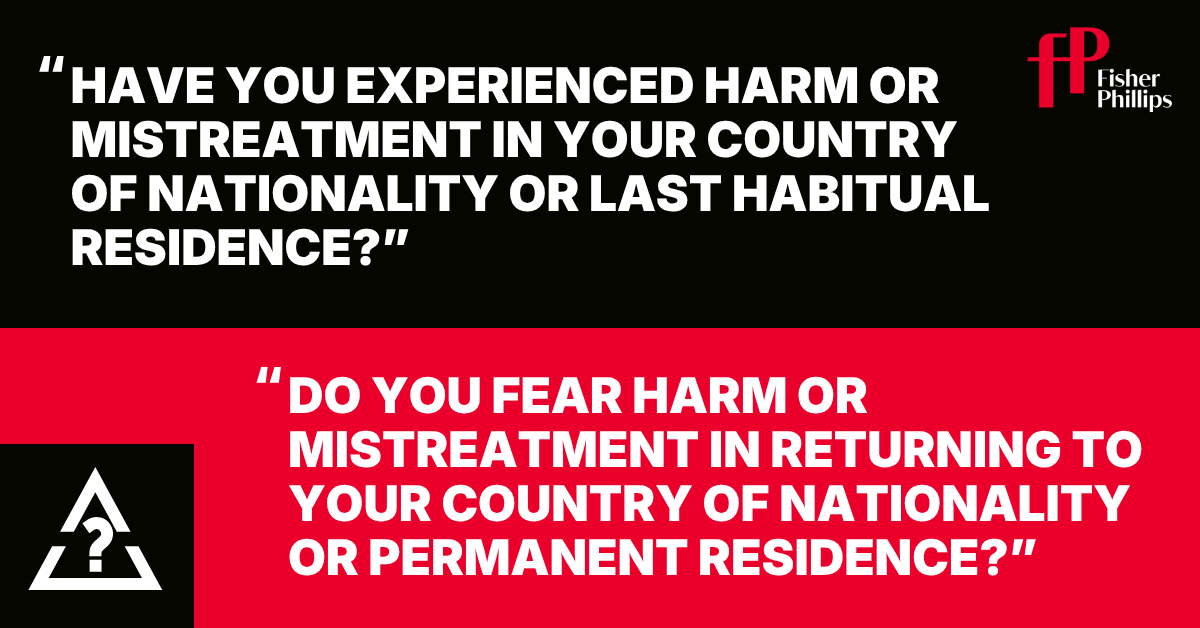
Under the new rules, applicants must verbally answer “no” to both questions for the visa interview to proceed and for the State Department to issue a visa. An affirmative response to either question, or a refusal to answer, will result in a visa denial.
Who Could Be Affected in Your Workforce?
This policy applies to all nonimmigrant visa categories, which could include a wide range of workers in your organization.
- The most immediately obvious concern involves employees who are currently outside the United States and need to renew or obtain a visa to return to their US-based positions. If any of these individuals come from countries experiencing political instability, civil conflict, or other conditions that might reasonably give rise to a fear of harm, they could face difficulties at the consular interview regardless of the legitimacy of their employment-based purpose of travel.
- H-1B and L-1 visa holders are a particular focus for many employers. These individuals are not subject to the standard presumptions that apply to tourist and business visitors, but that distinction does not insulate them from this new questioning requirement.
- Employees or prospective hires could be at risk if they are nationals of countries where persecution, civil unrest, or targeted violence is common. The directive does not provide exceptions for individuals whose fear is genuine but whose purpose of travel is entirely legitimate and unrelated to seeking US protection.
What Legal Complications Could Arise?
Under US law, any foreign national physically present in the United States may apply for asylum if they face persecution based on race, religion, nationality, political opinion, or membership in a particular social group. The right to apply for asylum exists independently of how someone entered the country or what they told a visa officer.
However, this new directive creates a permanent record. An employee who answers “no” at their visa interview and later applies for asylum will face questions about the consistency of their prior statements. A USCIS Asylum Officer or an Immigration Judge could treat the earlier denial as evidence bearing on the applicant’s credibility, potentially undermining an otherwise valid asylum claim.
Moreover, making a willful misrepresentation of a material fact on a visa application can result in a finding of inadmissibility under the Immigration and Nationality Act. While that ground alone is not always a bar to asylum, an INA misrepresentation finding can affect future visa applications, adjustment of status, and other immigration benefits. This creates a practical bind for applicants who are in genuine fear but trying to maintain their employment-based visa status.
What Should Employers Do Now? Your 5-Step Plan
There are five concrete steps you can take to protect your workforce and business operations.
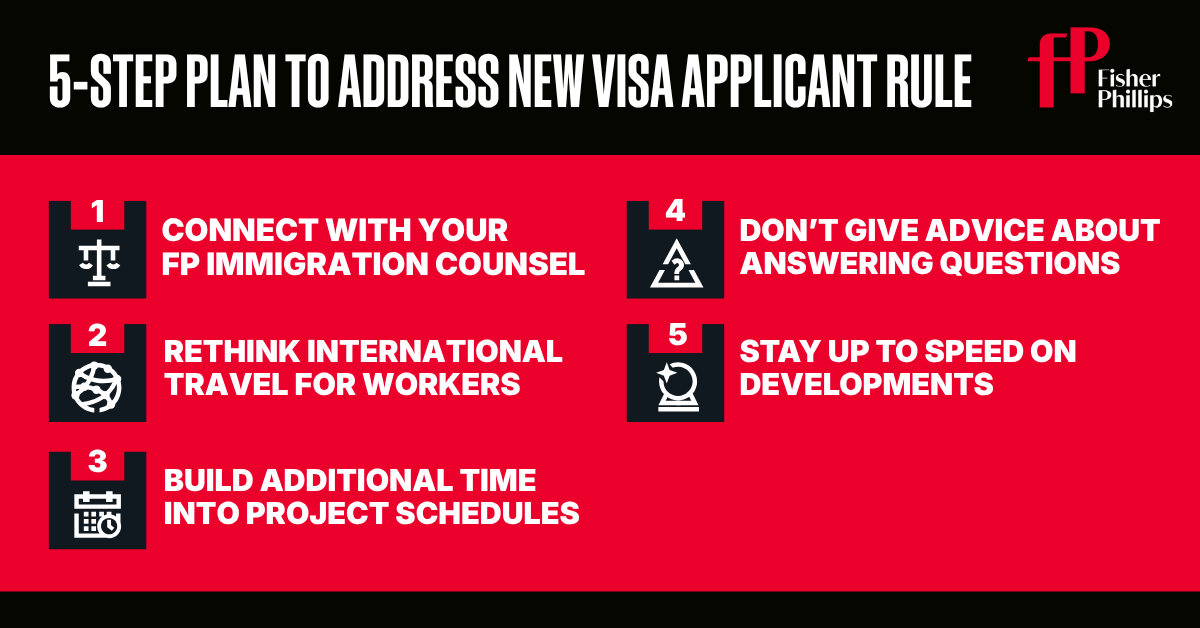
- First, work closely with your FP immigration counsel to identify any employees or sponsored workers who have upcoming visa interviews, particularly renewals scheduled in the near term. Understanding who may be at risk before they sit down with a consular officer is far better than managing the fallout after a denial.
- Second, consider whether any employees currently working in a US-based role could be affected if they travel internationally. If an employee leaves the country and requires a new visa to reenter, the new questions will apply. Thoughtful travel planning and possible temporary restrictions on international travel may be warranted.
- Third, for global mobility programs, build additional lead time into project schedules. Consular processing uncertainty means that timelines that were reliable six months ago may no longer hold.
- Fourth, don’t advise employees on how to answer these questions. That is not your role. Employers who attempt to coach applicants on their consular responses could expose themselves to serious legal risk.
- Finally, stay current. We expect legal challenges to this directive that could change things, and we wouldn’t be surprised by agency guidance or further policy changes. The best way to stay up to speed is by making sure you are subscribed to Fisher Phillips’ Insight System.
Conclusion
If you have questions about this policy, please contact your Fisher Phillips attorney, the authors of this Insight, or any member of our Immigration Practice Group. We will continue to monitor all developments related to this issue, so make sure you are subscribed to Fisher Phillips’ Insight System to get the most up-to-date information.
Related People