

As the new year gets underway, one workplace risk is already clear: the current flu season is shaping up to be one of the more intense in recent years. Public health data shows high and rising flu activity across much of the country, which increases pressure on employers to manage absenteeism, protect employee health, keep operations running, and consider the question of vaccinations (among other things). This Insight outlines what’s different about this flu season and why it should matter to employers, and gives you five practical steps to take now.
What’s Different About This Year
Several indicators suggest this is not a “routine” flu year.
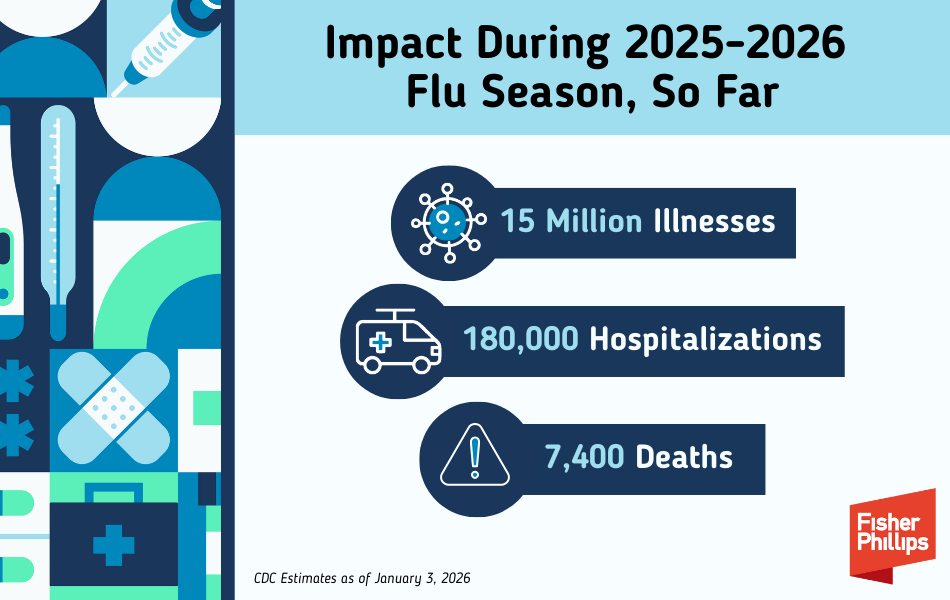
Staggering numbers
The sheer number of estimated illnesses, hospitalizations, and deaths from flu (as compiled by the CDC) is daunting for any year, but especially so early in the season.
Increasing rate of illness
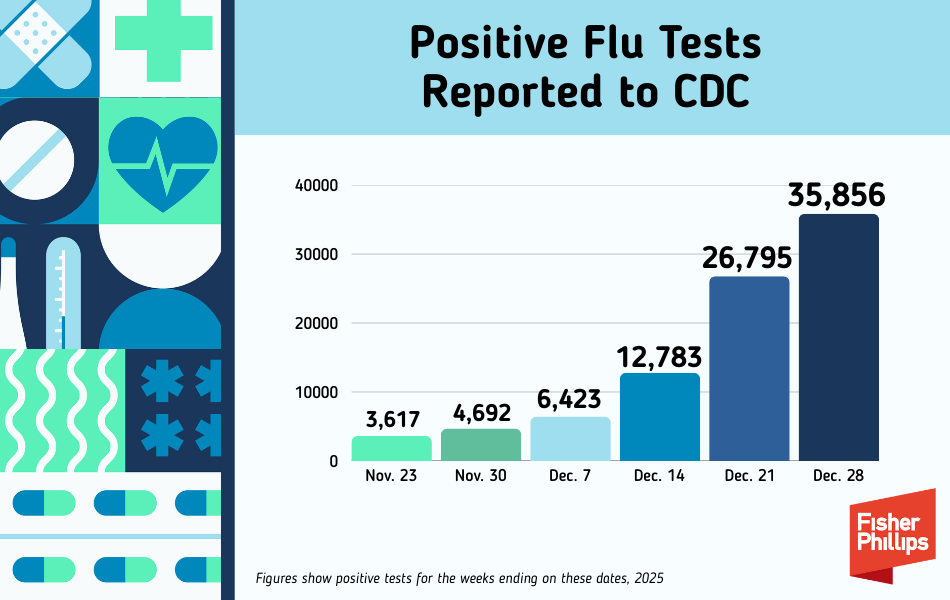
The number of positive flu tests has spiked in the past few weeks. Holiday travel and gatherings appear to have accelerated community transmission just as many employees returned to in‑person work.
Widespread and sustained activity
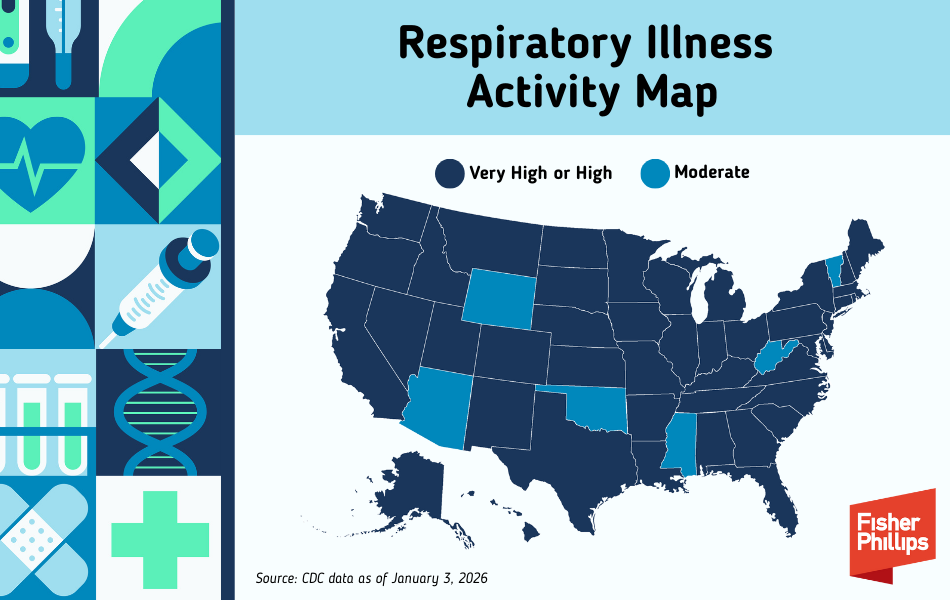
Flu levels are classified as high or very high in 44 states, with no clear peak yet in sight.
Rising severity
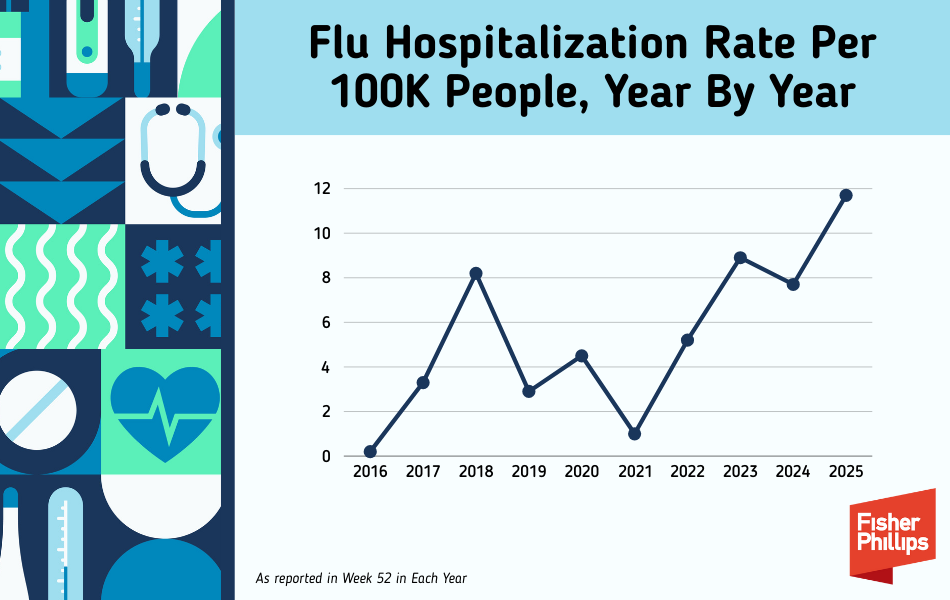
Flu hospitalization rates are at the highest seen at this point in the season for at least the past decade.
Why Should Employers Care?
There are few practical reasons employers should care about this development (beyond, of course, just showing compassion for your sick employees and their families).
Absenteeism and Presenteeism Will Rise
Past CDC analyses show that workplace absenteeism reliably spikes alongside flu activity. Just as importantly, employees who work while sick (“presenteeism”) often experience reduced productivity for one to two weeks and increase the likelihood of workplace transmission.
Operations and Staffing May Be Strained
Flu-related absences often cluster rather than occur evenly. That can create sudden staffing gaps, especially in roles that require on-site presence, are customer-facing, or involve safety-sensitive duties.
Employers Still Have Legal Obligations
And of course, employers have a legal responsibility when it comes to sick employees and their family members. You’ll need to comply with federal and state sick and family leave laws, state and local paid sick leave laws, state and local paid sick leave laws, and discrimination laws related to the application of health-related policies. In some extreme instances, the flu could trigger OSHA’s General Duty Clause requirement to provide a workplace free from recognized hazards.
|
Industries Facing Elevated Risk While all employers should be paying attention, flu season hits some sectors harder than others:
|
5-Step Employer Action Plan
This flu season’s elevated activity and higher hospitalization rates make proactive planning more important than ever. Here are five steps to guide you through this year’s season.
1. Start With Clear, Flexible Leave and Attendance Policies
Prepare your workplace with a balanced mix of policy, communication, and flexibility. A strong sick-leave framework reduces avoidable transmission, supports employees who do the right thing by staying home, and helps you maintain continuity during short-term staffing disruptions.
- Encourage employees to stay home when sick: Explicitly discourage “presenteeism” and reinforce that coming to work ill increases risk to coworkers and operations.
- Confirm paid sick leave compliance: Review state and local paid sick leave requirements and ensure attendance policies allow managers to excuse illness-related absences without penalty.
- Plan for clustered absences: Identify critical roles and cross-training options so operations can continue if multiple employees are out at the same time.
2. Reinforce Basic Prevention and Workplace Hygiene
While not new, basic infection-control steps remain the foundation of flu prevention. OSHA and public health agencies continue to emphasize hygiene and environmental controls as effective ways to reduce transmission in non-healthcare workplaces.
- Promote hand hygiene and respiratory etiquette: Provide handwashing facilities, sanitizer, and reminders about covering coughs and sneezes.
- Increase cleaning of shared spaces: Focus on high-touch surfaces such as door handles, break rooms, shared equipment, and restrooms.
- Reduce close-contact exposure where feasible: Consider staggered shifts, spacing adjustments, or modified break schedules during peak flu weeks.
3. Address Vaccination Carefully and Without Controversy
When done thoughtfully, vaccination initiatives support both employee health and operational stability. And while it remains a key mitigation tool, heightened sensitivity around the subject of vaccinations may lead you to pause this year. Despite any lingering controversy, however, it’s important to note that the CDC still says that “getting a yearly flu vaccination is the best way to reduce the risk from flu and its potentially serious complications.” So the key is to strike a balance between encouraging vaccination uptake and respecting individual rights and legal obligations. In some workplaces like healthcare and other high-risk settings, in fact, requiring vaccination (with appropriate exemptions and accommodations) can be a reasonable part of a broader illness-prevention strategy.
- Encourage broad vaccination access: Offer on-site clinics, partner with local providers, or provide vouchers/time off for flu shots. Making vaccination easy increases uptake without heavy mandates, and aligns with both CDC and OSHA guidance that employers encourage workers to get vaccinated.
- Consider targeted requirements where risk is highest: In healthcare and other high-exposure environments, require flu vaccination as a condition of employment with documented exemption and accommodation processes (e.g., medical or religious). These targeted policies can be legally defensible if uniformly applied and accommodations are provided. (Note: you must comply with Title VII, ADA, and applicable state law when implementing mandates.)
- Frame vaccination as part of a comprehensive plan: Whether or not a mandate is in place, reinforce that vaccination complements other measures (like flexible leave, staying home when sick, best hygiene practices) to reduce illness spread and protect vulnerable populations.
4. Communicate Expectations Clearly and Consistently
Even well-designed policies fall flat without effective communication. Clear, repeated messaging helps normalize healthy behavior and ensures managers and employees understand expectations before issues arise.
- Set expectations early: Remind employees when to stay home, how to report illness, and what flexibility options are available.
- Train managers to apply policies consistently: Supervisors should know how to respond when employees report symptoms or arrive at work sick.
- Reinforce a health-first culture: Frame staying home when ill as protecting coworkers, customers, and the business as a whole.
5. Document Decisions and Monitor Conditions
From a risk-management standpoint, employers should treat flu-season planning as an ongoing process. Monitoring conditions and documenting actions taken can reduce both operational and legal risk.
- Track flu activity and absentee trends: Adjust mitigation steps as community transmission rises or falls.
- Document communications and policy updates: Keep records showing that the organization assessed risks and responded reasonably.
- Revisit legal obligations periodically: Ensure continued compliance with OSHA’s General Duty Clause, paid leave laws, and anti-discrimination requirements as conditions evolve.
Conclusion
We will continue to monitor developments in this area and provide updates as warranted. Make sure you are subscribed to Fisher Phillips’ Insight System to get the most up-to-date information. If you have any questions, contact the authors of this Insight, your Fisher Phillips attorney, or any member of our Workplace Safety Practice Group.
Related People