

H-1B visa applicants in India are experiencing mass rescheduling of consular interviews in the wake of sweeping new social media vetting requirement announced by the US State Department last week. Applicants with appointments in mid-December are being systematically rescheduled for as late as April 2026 due to the time and resources it will take to complete the additional steps. As this development unfolds, we expect expanded security screening at other US Consulates and for other visa types. How will this impact your workforce and what steps can you take now to prepare?
Quick Background
Starting December 15, H-1B workers and their H-4 spouses and children must make their social media profiles public so consular officers can review their online activity and work history as part of expanded security screening. Click here for the top 10 things your business needs to know about the new social media vetting rules – and what you should do in response.
The State Department said it will use social media content to verify employment backgrounds, identify inconsistencies, and flag potential security concerns. The rule mirrors earlier changes imposed on student visas. This model is now extended to H-1B employment visas at all consulates throughout the world.
Enhanced security screening is expected at other US Consulates and for other visa types. U.S. Customs and Border Protection also proposes to require visitors from visa waiver countries to disclose five years of social media history, including selfies. It is expected that this increased scrutiny will affect nearly every foreign traveler seeking admission to the US, which could lead to widespread visa appointment delays.
The Latest Developments
Now, reports are coming in that applicants and their families who are processing H-1B and H-4 visas in India are being rescheduled from this month to the end of March or April, and in some cases as far out as July. Notably, however, their biometrics appointments are still proceeding as scheduled.
The reasons cited for the interview delays are the demands of the new vetting requirements and consular posts’ decreased capacity. At this time, requests for earlier appointments are not being honored. As a result of the rescheduling of appointments, many applicants are finding themselves stuck outside the US for an unanticipated and unknown period time without an ability to return to the US to their families, homes, or employment.
The Bigger Picture
This is the latest in a growing series of pressures on the H-1B system, which already includes heightened investigations, new fee requirements, intensified employer scrutiny, and a proposed rule to replace the random lottery system with a weighted, wage-based process for selecting recipients.
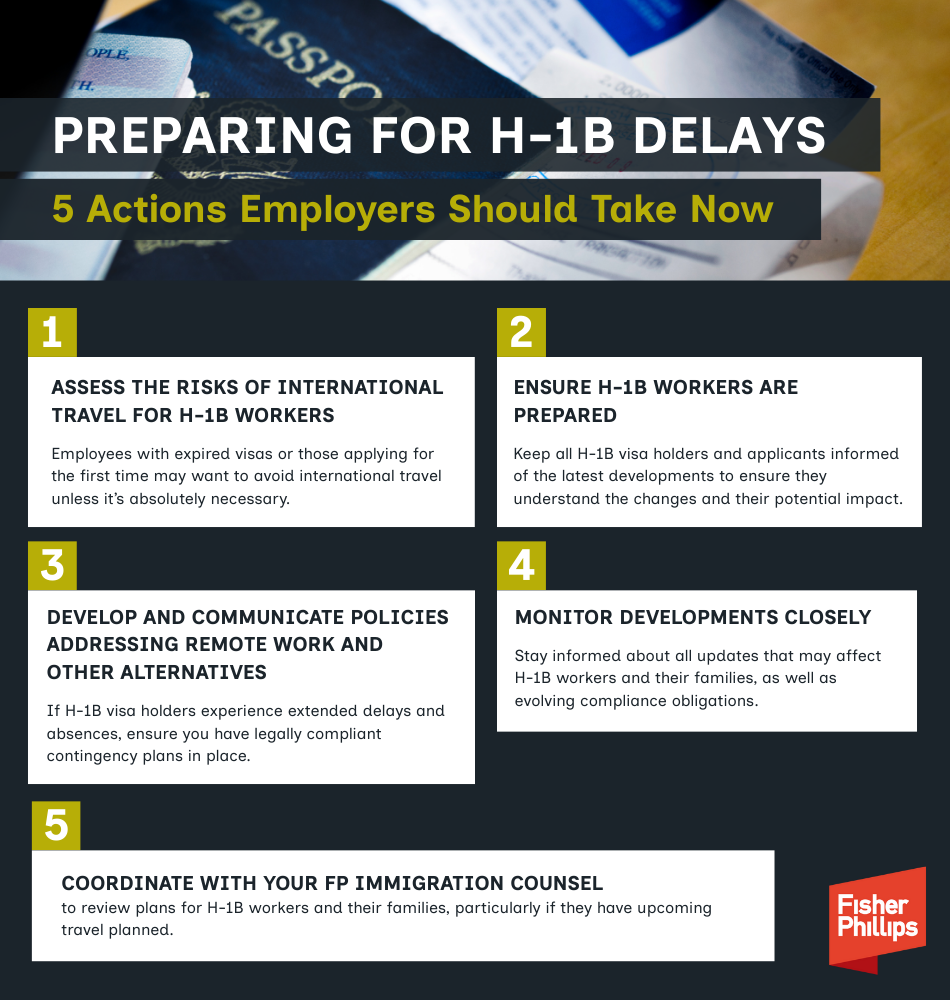
5 Actions Employers Should Take Now
Here’s what you should consider to be proactive as your foreign national workforce faces major changes and delays:
1. Assess the risks of international travel for H-1B workers. Impacted individuals traveling outside of the US for visa stamping could face months-long delays returning to the US, if their consular appointments are pushed back. Employers should advise their employees with expired visas, or those applying for the first time, to avoid international travel unless it’s absolutely necessary.
2. Ensure H-1B workers are prepared. Keep all H-1B visa holders and applicants informed of the latest developments to ensure they understand the changes and their potential impact. If they opt to travel internationally, they should expect delays and have a plan on how to move forward if they are unable to return to the US for an extended period of time.
3. Develop and communicate policies addressing remote work and other alternatives. If H-1B visa holders experience extended delays and absences, ensure you have legally compliant contingency plans in place to manage workloads, including the possibility of remote work arrangements. Have plans in place for leave options or possible terminations if working internationally is not permitted in your organization.
4. Monitor developments closely. Employers should stay informed about all updates that may affect H-1B workers and their families, as well as evolving compliance obligations. Affected workers should keep informed about their appointments, check regularly for updates, and notify their employers of changes, as needed.
5. Coordinate with your FP immigration counsel to review plans for H-1B workers and their families, particularly if they have upcoming travel planned.
Conclusion
For support, please contact your Fisher Phillips attorney, the authors of this Insight, or any member of our Immigration Practice Team. Make sure you are subscribed to Fisher Phillips’ Insight System to receive the most up-to-date information directly to your inbox.
Related People